How to Capture Addresses from Phone Calls Without Errors
Wrong addresses taken over the phone cause failed dispatches and lost revenue. Here is why it happens and how automated speech-to-address extraction with validation fixes it.
In short
Addresses taken by ear on a phone call go wrong from misheard digits, mid-call corrections, and noise. Automated speech-to-address extraction transcribes the recording, pulls out every address, validates each against map data, and flags only the uncertain ones.
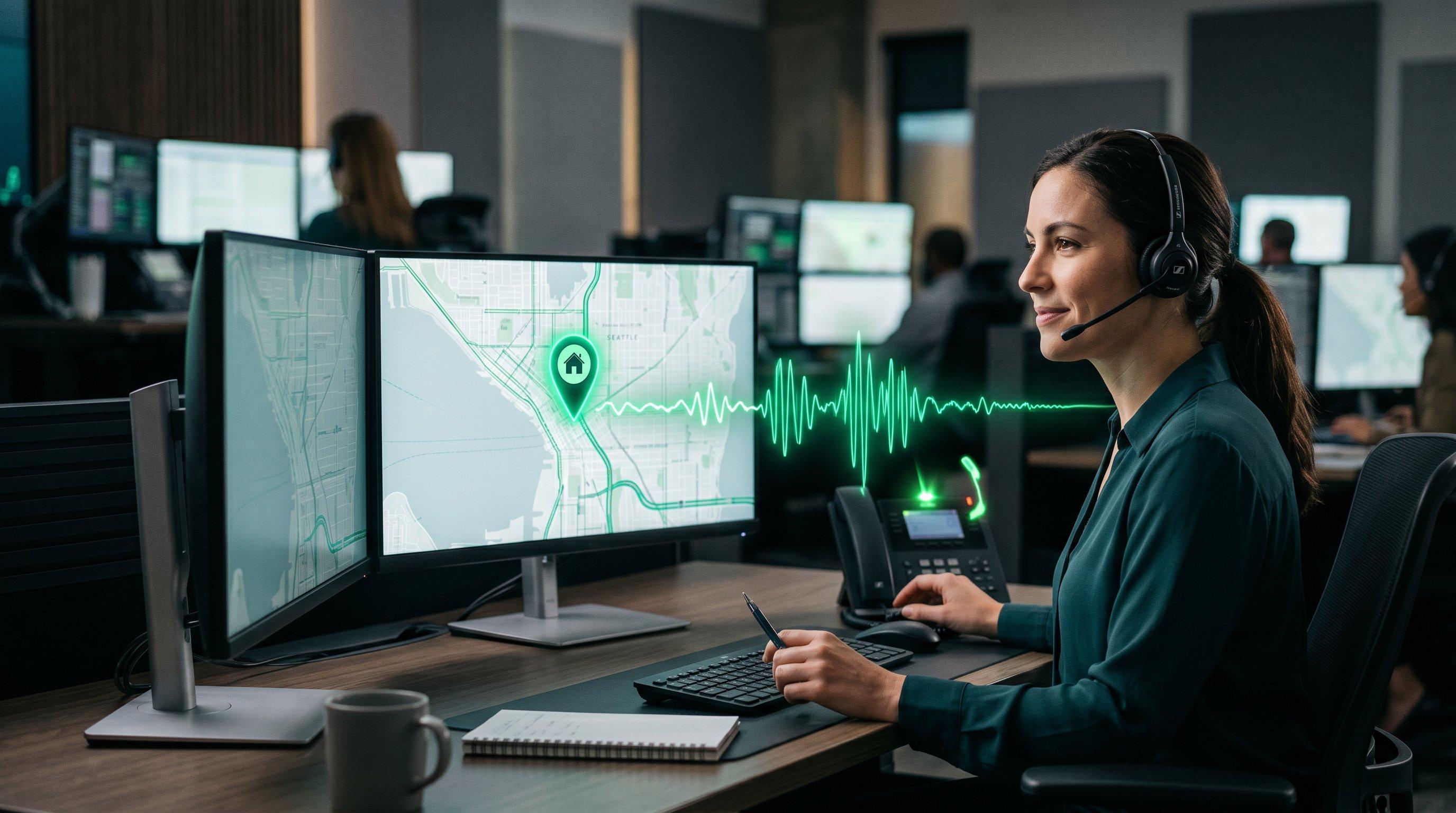
Every field-service business runs on one fragile sentence: "What's the address?" The answer comes over a noisy phone line, often spelled out, sometimes corrected mid-sentence, and an agent types it while juggling three other things. A single wrong digit sends a truck to the wrong street — and that mistake is expensive.
Why phone addresses go wrong
Addresses captured by ear fail for predictable reasons, and they compound on a busy line:
- Similar-sounding streets — "Graywell" versus "Grayville", "Main" versus "Maine".
- Misheard digits — "fifteen" and "fifty", "two" and "to", transposed ZIP codes.
- Mid-call corrections — the caller says one number, then fixes it, and the agent keeps the first.
- Background noise — traffic, wind, and crosstalk on roadside or mobile calls.
- Multiple addresses in one call — service address, billing address, an old address, a new one.
The cost is not abstract. A single failed dispatch in field service — fuel, a technician's wasted hour, a rescheduled appointment, an annoyed customer — typically runs $50 to $150. A handful per week is thousands of dollars a month leaking out of operations.
Manual fixes do not scale
The usual remedies — "read it back to the customer", "listen to the recording later", "double-check in the CRM" — all depend on a human having time and attention that a busy dispatch desk does not have. Read-backs get skipped under pressure. Re-listening to recordings happens after the truck has already left.
How automated speech-to-address extraction works
A modern pipeline turns the recording into a verified, ready-to-use address in a few automated steps:
- Transcription: the call audio is converted to text with speech recognition tuned for phone-quality audio.
- Extraction: a language model pulls out every address mentioned, labels its role (service, billing, pickup, delivery, old, new), and flags corrections.
- Validation: each candidate is checked against authoritative mapping data, so a street that does not exist is rejected instead of dispatched.
- Confidence and review: each result gets a confidence score, and anything uncertain is flagged for a quick human glance instead of being trusted blindly.
The decisive advantage over a human typing in real time is cross-checking. When two independent recognizers disagree on a digit, or when a validated address does not exist on the map, the system catches it. In practice this recovers the address the caller actually said even when the raw transcript is wrong.
What good looks like
A reliable system never silently invents an address. If a caller gives a street that cannot be validated, the right behavior is to surface it for review — "please confirm" — not to send a truck into the void. Confidence scores and review flags exist precisely so a dispatcher spends two seconds on the 5% of calls that need attention instead of re-checking all 100%.
Where to start
You almost certainly already record your calls. The fastest path is to feed those recordings into an extraction service automatically — by API, or by pointing your phone provider's recording webhook at it — and review the results in one place. HearLoc does exactly this: it extracts and validates every spoken address from a recording and shows you what needs a second look. The first prevented wrong dispatch usually pays for the month.
Frequently asked questions
Can software really get the address right from a noisy call?
Yes. Two independent speech engines transcribe the recording and the results are cross-checked, so a digit one engine mishears is caught. Each address is then validated against Google map data, and only low-confidence results are flagged for a quick human check.
How is this different from a call-transcription tool?
Transcription gives you raw text. HearLoc produces a dispatch-ready result: every address extracted, labeled by role (service/billing/pickup), validated against map data, with access notes captured and a confidence score — not a transcript you still have to read.
Do I have to replace my phone system or CRM?
No. HearLoc works behind the call recording you already keep and returns the verified address by REST API, signed webhook, or CSV. Your phone system, dispatch board, and CRM stay exactly as they are.
How quickly is the address available?
Each recording is processed automatically in seconds to under a minute, so the verified address is ready before dispatch — not discovered later when a tech is already at the wrong door.
Related
Turn your recorded calls into verified addresses
HearLoc extracts and validates every address mentioned in a call recording, with confidence scores and review flags — by API or straight from your phone provider.
Start free trial